ORSJ - Talal Talabani
Positions
| Name | Callsign | Frequency | Login ID | Remarks |
|---|---|---|---|---|
| Jalal Talabani TWR | Sulaymaniyah Tower | 118.300 | ORSJ_TWR |
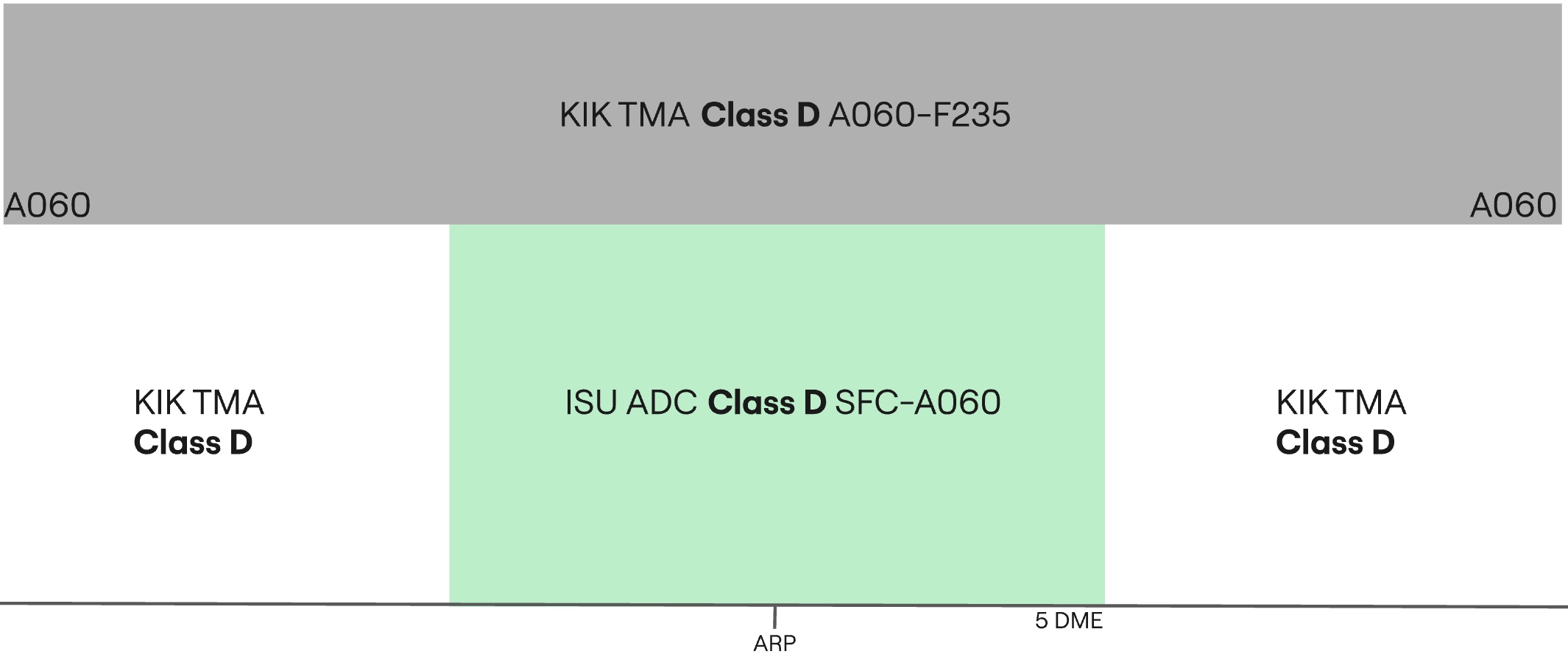
Airspace - Procedural Class D
ORSJ_TWR is responsible for the Sulaymaniyah CTR airspace from SFC to A060.
VFR Operations
All VFR clearances are assigned by the relevant TWR controller.
Circuits
VFR Circuits are permitted on runways 13 and 31.
All VFR aircraft wishing to do remain in the circuit at Jalal Talabani shall be issued A060 and the following circuit directions:
| Runway | Direction |
|---|---|
| 31 | Left |
| 13 | Right |
Phraseology
ABC: Jalal Talabani Tower, ABC holding short E runway 31, full ready.
ISU TWR: ABC, Jalal Talabani Tower, cleared to operate in the circuit area not above altitude 6000ft, left hand circuits report on the downwind, surface winds 320 degrees 5 knots, cleared for take-off runway 31.
ABC: Cleared to operate in the circuit area not above altitude 3000ft, will report on the left downwind, cleared for take-off runway 31, ABC.
VFR Circuits shall not be permitted at the aerodrome during times of increased IFR departure or arrival activity.
Leaving the CTR
Once VFR aircraft are ready for departure, they shall be cleared for take-off in sequence. As they begin their crosswind turn they shall be instructed to report leaving the CTR. VFR procedures inside the Jalal Talabani CTR must be conducted at or below A060.
Phraseology
FYI: Jalal Talabani Tower, FYI holding short E, runway 31.
ISU TWR: FYI, Jalal Talabani Tower, surface winds 320 degrees 5 knots, cleared for take-off runway 31.
FYI: Roger, cleared for take-off runway 31.
AIRCRAFT ON THE CROSSWIND TURN
ISU TWR: FYI, report leaving the Jalal Talabani CTR, maintain at or below altitude 6000ft.
FYI: At or below 6000ft, wilco, FYI.
Aircraft requesting to exit the Jalal Talabani CTR shall be assigned a clearance limit followed by a valid VFR cruising altitude (+500ft).
Phraseology
YYC: Jalal Talabani Tower, YYC is requesting to exit the Jalal Talabani CTR via direct Erbil, altitude 7500ft.
ISU TWR: YYC, Sulaymaniiah Tower, cleared to leave the Jalal Talabani CTR direct Erbil, maintain altitude 7500ft, squawk 7403, QNH 998 hectopascals.
YYC: Cleared to leave the Jalal Talabani CTR direct Erbil, maintain altitude 7500ft, QNH 998, and squawk 7403, YYC.
Entering the CTR
Inbound VFR aircraft shall be sent to TWR with enough time such that two-way radio communications have been established before aircraft receive clearance to enter the CTR.
On initial contact, Jalal Talabani TWR will pass the instructions for joining the circuit, as well as any other pertinent information such as traffic information with the sector.
Phraseology
YYC: Jalal Talabani Tower, YYC is requesting to enter the Jalal Talabani CTR from the southeast for circuits.
ISU TWR: YYC, Jalal Talabani Tower, information A, cleared to enter the Jalal Talabani CTR, maintain at or below altitude 6000ft, report final runway 31 with intentions, squawk 7403.
YYC: We have A, cleared to enter the Jalal Talabani CTR, at or below altitude 6000ft, will report final runway 31 with intentions, squawk 7403, YYC.
ISU TWR: YYC, correct, QNH 998 hectopascals.
During times of heavy IFR arrival activity, VFR arrivals may be denied entry into the CTR and instructed to hold outside of the CTR awaiting further instructions.
IFR Operations
IFR clearances are issued by Jalal Talabani TWR, ensuring appropriate routing.
Aircraft flying IFR may either fly a SID that fly to either waypoint KIRKUK or ERBIL, or an omnidirectional departure.
Standard Instrument Departures
Jalal Talabani makes use of SIDs that fly to either waypoint KIRKUK or ERBIL.
The departure shall be assigned based on the departure waypoint, based on which of these two waypoints is closest to the aircraft’s flight planned route. The SID is designed to allow aircraft to pass the waypoints PUTRI or RASKI, both located 10nm from SUL, at or above A110, to avoid terrain to the west and shall be transferred to Kirkuk TMA when passing A060
The Standard Instrument Departures available are:
| SID | 31 | 13 |
|---|---|---|
| ERBIL | 1 | 2 |
| KIRKK | 1 | 2 |
Warning
These departures may only be assigned to aircraft departing towards waypoints KIRKUK or ERBIL, other IFR departures shall receive an omni-directional departure.
The departure runway does not need to be included within the clearance, as these SIDs are runway specific.
Phraseology
IAW123: Jalal Talabani Tower, IAW123, request clearance to Antalya, with information Alpha.
ISU TWR: IAW123, Jalal Talabani Tower, Cleared to Antalya, KIRKK1 departure, flight planned route, initial climb 6,000 ft, squawk 4301.
Omni-directional Departures
Departing IFR aircraft shall fly an omni-directional departure, if they are not flying a SID.
If an aircraft are flying an omnidirectional to one of these waypoints, the Jalal Talabani VOR (SUL) shall always be their first waypoint in the clearance. Followed by one of the following waypoints to join their flight-planned route:
- TOMSI
- BOXIX
- SOBIL
- MUTAG
Phraseology
IAW123: Jalal Talabani Tower, IAW123, request clearance to Antalya, with information Alpha.
ISU TWR: IAW123, Jalal Talabani Tower, Cleared to Antalya, expect omni-directional departure, flight planned route, squawk 4301.
Arrivals
In addition to aircraft on the ground at Jalal Talabani, ORSJ_TWR is also responsible for airborne arrivals and departures at and below 6,000ft. As is the procedure at procedural airports, due to the lack of radar, only one aircraft must operate in the non-radar procedural airspace at one time.
Arrivals are transferred to Jalal Talabani TWR from Baghdad TMA at 7,000ft or 8,000ft, following either the ERBIL1, ERBIL2, KIRKK1, KIRKK2 arrivals.
Phraseology
IAW123: Jalal Talabani Tower, IAW123, overhead SUL VOR, descending through 7000ft.
ISU TWR: IAW123, Jalal Talabani Tower, report established on the ILS runway 31.
Standard Taxi Routes
All departing aircraft shall be assigned the most appropriate taxiway, onto taxiway A. Jalal Talabani TWR must exercise extreme caution on taxiway A, as conflicts can easily occur between arriving and departing traffic.
Runway Modes
Preferred Runway Modes
Winds must always be considered for Runway modes (Crosswind <20kts, Tailwind <5kts), however the order of preference is as follows:
| Priority - Mode | Arrivals | Departures | Remarks |
|---|---|---|---|
| 1 - MODE A | 31 | 31 | |
| 2 - MODE B | 13 | 13 |
Note
The preferential runway is runway 31.
Coordination
Departure Procedures
Due to the airspace structure in Jalal Talabani, all departures shall be coordinated and receive a release for departure with the relevant Baghdad TMA controller (ORKK_APP) before release.
'Next' coordination is not required to Baghdad TMA for aircraft that are:
- Departing from a runway nominated on the ATIS; and
- Assigned the Standard assignable level; and
- Assigned a Procedural SID; or
- Assigned a Standard Assignable Heading
'Next' coordination is additionally required for:
- Visual departures (eg. VFR aircraft)
- All departures not on a Standard Assignable Heading
- After a go around, the next departure from that runway
The Standard Assignable level from Jalal Talabani TWR to Baghdad TMA is:
| Aircraft | Level |
|---|---|
| IFR | A060 |
| VFR | A060 |
Standard Assignable Departure Headings
As there are only 2 SIDs currently used in Jalal Talabani, aircraft that are flying an omni-directional departure must receive an assigned heading with their line up or take-off clearance. 'Next' coordination is not required to the relevant Baghdad TMA controller when the departing aircraft has been assigned the standard assignable level and assigned one of the headings listed below:
| Runway | Heading |
|---|---|
| 13 | H130 |
| 31 | H310 |
Tip
If strong winds are present at altitude, TWR/TMA should discuss slight changes to these headings (+/- 5 degrees) to compensate for large crosswind components.
Phraseology
IAW23: IAW23 ready for departure.
ISU TWR: IAW23, after departure climb to altitude 6000ft, fly runway heading, surface winds variable at 3 knots, runway 13 cleared for take-off.